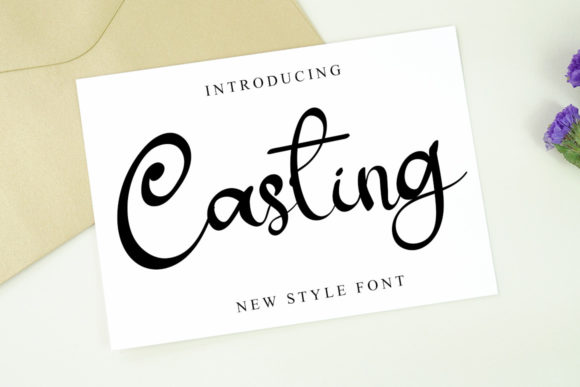
Casting: A Stylish Font for Business
As a small business owner, I know how important it is to create a brand that feels professional and consistent. One of the simplest yet most impactful tools I’ve used is the Casting font. It’s a chic, trendy script typeface that adds confidence and versatility to any project. Whether you’re designing a logo, creating social media content, or printing product labels, Casting can help your brand stand out in a crowded market.
What Makes Casting Unique
Casting has a stylish, modern feel with its elegant curves and confident lines. It’s not just a pretty font—it’s designed to work across a variety of business materials. The font includes stylish alternates and ligatures, which give it a more refined and personalized look. These details make it ideal for branding that needs to feel both creative and polished.
Its personality is bold but approachable, making it perfect for businesses that want to convey a sense of style without being too formal. Whether you run a boutique, a café, or an online shop, Casting can help your brand feel more cohesive and professional.
Real-World Applications for Small Businesses
I’ve used Casting in several ways to enhance my brand. For example, when designing a logo, I found that the font added a touch of elegance that made the brand feel more trustworthy. It also works well on business cards, where a clean, readable font is essential but still needs to stand out.
For product labels, especially for handmade items like candles or skincare products, Casting gives a personal, artisanal feel. On packaging design, it helps create a visual identity that customers remember. Even on small labels or mobile screens, the font remains legible and attractive.
When creating social media graphics, such as Instagram posts or Pinterest pins, Casting adds a unique flair that draws attention. It’s also great for website banners, where a strong, eye-catching font can make a lasting impression.
Using Casting in Different Branding Scenarios
Casting is best used as a headline, logo, or display font. It shines when it’s the main focus of a design, whether it’s on a menu, a flyer, or a digital ad. However, it’s also versatile enough to be used as an accent font alongside other typefaces.
For example, pairing Casting with a clean sans serif font like Arial or Helvetica can create a balanced look that’s both modern and readable. This combination works well for website copy, email newsletters, or printed brochures where clarity is key.
If you’re working with a more traditional brand, pairing Casting with a serif font like Georgia or Times New Roman can add depth and character. This pairing is ideal for luxury brands, coaching services, or any business that wants to blend creativity with professionalism.
Testing Casting Before Full Implementation
Before using Casting across your entire brand, I recommend testing it in different contexts. Print samples, digital mockups, and social media thumbnails can all show how the font looks in real-world settings. Pay attention to how it appears on small text, mobile screens, and printed materials to ensure it remains readable and effective.
Many font platforms offer free trials or sample downloads, so take advantage of those to see how Casting fits into your existing design system. This step can save time and prevent costly changes later on.
Font Pairing Tips for Better Design
Pairing fonts can be tricky, but it’s an essential part of creating a strong brand identity. When using Casting, aim for contrast. If your main text is a simple sans serif, let Casting take the lead in headlines or logos. This creates visual interest without overwhelming the viewer.
Another tip is to keep your color scheme in mind. Dark text on a light background usually works best for readability, but if you’re using a colored background, test Casting to make sure it stands out clearly. This is especially important for digital ads and social media thumbnails, where quick recognition matters.
Commercial Licensing and Practical Use
One thing to keep in mind is commercial font licensing. If you’re using Casting for product packaging, client work, or digital downloads, make sure you have the proper license. Most premium fonts like Casting come with specific usage rights, so always check the terms before finalizing your design.
This is especially important for small businesses that sell physical products or offer design services. Using a font without the right license can lead to legal issues, so it’s better to be safe than sorry.
How Casting Helps Build Brand Trust
Consistency is key in branding, and Casting helps create that consistency across all touchpoints. Whether it’s on a business card, a website banner, or a customer thank-you note, using the same font reinforces brand recognition.
Customers are more likely to trust a brand that looks professional and well-designed. Casting helps achieve that look without requiring complex design skills. It’s a powerful tool for small businesses that want to elevate their visual identity on a budget.
From bakery branding to beauty product packaging, Casting has proven to be a reliable choice for entrepreneurs who value style and functionality. It’s a font that doesn’t just look good—it helps build a stronger, more recognizable brand.