Roman Hand: A Friendly Font for Creative Projects
There I was, staring at a blank brand board, trying to figure out how to bring a small café’s identity to life. The client wanted something warm, approachable, and a little bit personal. That’s when I reached for Roman Hand—a clean, friendly, and natural handwritten font that felt just right for the job.
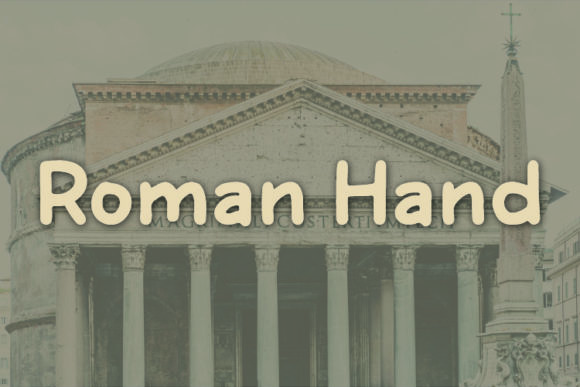
Roman Hand has a soft, organic feel that makes it perfect for projects where a human touch matters. It’s not too ornate or fussy, which means it can work in a variety of design contexts without overwhelming the message. The letterforms are slightly irregular, giving it that handcrafted look, but still maintain a level of consistency that keeps things professional.
I started by testing it on a logo draft. The font added a sense of warmth that a more rigid typeface might not have. It wasn’t too bold, but it had enough character to stand out on its own. For a café, that meant the name could be the focal point without needing a lot of extra design elements around it.
As I moved into packaging design, Roman Hand proved to be versatile. On a coffee bag, it gave the product a personal, artisanal feel. On a label sticker, it added a touch of authenticity that made the product stand out on the shelf. The font didn’t compete with the imagery or color scheme—it complemented them.
One of the things I appreciated about Roman Hand was how well it worked in different sizes. As a headline font, it brought energy to a website header or a social media graphic. But even in smaller text, like a menu item or a product description, it remained readable and charming. That kind of flexibility is invaluable when building a full brand system.
When working on a business card, I found that Roman Hand helped create a sense of connection. It wasn’t too formal, which made it feel more accessible. For a small business, that’s important—people want to feel like they’re dealing with real people, not a faceless corporation.
Another area where Roman Hand shone was in editorial design. Whether it was a brochure, a flyer, or a poster, the font added a sense of personality that made the content more engaging. It wasn’t the main focus, but it added a subtle layer of interest that kept the design from feeling flat.
For digital templates, Roman Hand worked well as a supporting typeface. Paired with a serif or sans serif font, it created a nice contrast that helped define visual hierarchy. The font’s natural flow made it a great choice for headings or accents, while still allowing other elements to take center stage.
I also tested Roman Hand on a shop sign. The result was exactly what I hoped for—something that felt welcoming and easy to read. It wasn’t too flashy, but it had enough character to make the business stand out in a crowd.
One thing to consider when using Roman Hand is its readability. While it’s designed to be legible, it’s best used in short-form text rather than long paragraphs. That makes it ideal for headlines, logos, and labels, but not necessarily for body copy. Still, in the right context, it can add a unique touch that sets a brand apart.
When pairing Roman Hand with other fonts, I found that it works well with both serif and sans serif typefaces. A classic serif font like Georgia or Baskerville can provide a strong foundation, while a modern sans serif like Helvetica or Futura can add balance. For a more creative approach, pairing it with another script font can add depth and variation without clashing.
It’s also worth noting that Roman Hand includes multiple styles, alternates, and ligatures. These features give designers more control over how the font looks and feels, making it easier to tailor the typography to specific needs. The font also supports a range of languages, which is helpful for international projects or multilingual branding.
From a practical standpoint, Roman Hand is a premium font that offers value for both personal and commercial use. Its file formats are standard, and the licensing terms are clear, which makes it easy to integrate into design assets. Whether you’re working on a website, a print project, or a digital template, Roman Hand can be a reliable part of your design toolkit.
Overall, Roman Hand is a font that brings a sense of warmth and personality to any project. It’s not the most dramatic or high-contrast typeface, but that’s part of its charm. It’s the kind of font that feels like it was made with care, and that’s exactly what a small business or creative studio needs to connect with their audience.
As I wrapped up the café project, I knew that Roman Hand had played a key role in shaping the brand’s visual identity. It wasn’t just a font—it was a tool that helped tell the story of the business in a way that felt genuine and authentic.